

Origin
[YOUR OPENING — where the bag comes from and what it was made to carry. Write it the way a dealer talks to a buyer standing in front of the bag, not the way an SEO brief describes a keyword.]
[CONTINUE — the line from saddlery to luggage, and how the proportions followed from the original job.]
The sizes
The number is the width in centimetres across the base. Everything else — height, depth, handle drop — moves with it, which is why a 50 is not simply a larger 40.
| Size | Width | Height × depth | Carried as |
|---|---|---|---|
| 32 | 32 cm | [YOUR FIGURES] | [YOUR NOTE] |
| 40 | 40 cm | [YOUR FIGURES] | [YOUR NOTE] |
| 45 | 45 cm | [YOUR FIGURES] | [YOUR NOTE] |
| 50 | 50 cm | [YOUR FIGURES] | [YOUR NOTE] |
| 55 | 55 cm | [YOUR FIGURES] | [YOUR NOTE] |
Leathers
[YOUR LEATHER NOTES — Togo, Clemence, Ardennes, Barénia, Fjord, Courchevel and the exotics you carry. For each: the grain, how it holds structure, how it ages.]
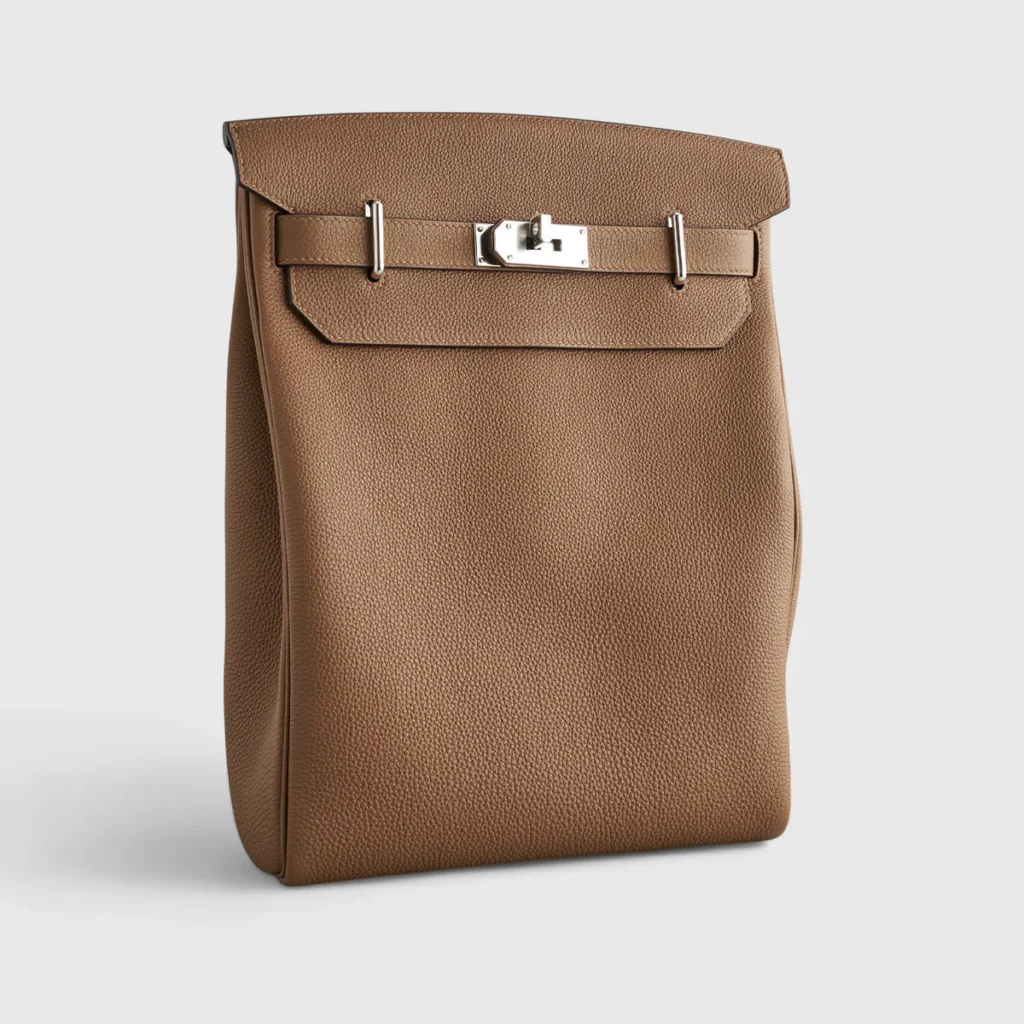
[YOUR PULL QUOTE — one sentence worth lifting out, usually the thing a buyer gets wrong.]
Hardware
[YOUR HARDWARE NOTES — palladium, gold, permabrass and gilt metal: how each sits against the leathers you stock, and how each wears.]
Marks and dating
[YOUR NOTES ON STAMPS AND DATING — where the marks sit and what they tell you. This is the section people bookmark and link to, so it is worth more of your time than the rest of the page combined.]
Choosing
[YOUR CLOSING — how to decide between two examples: size against daily use, leather against wear, hardware against everything else you own.]


